You’re standing in the hardware store aisle, staring at dozens of blue, grey, and metal boxes. While they all look like simple containers, picking the wrong one guarantees frustration when your new switch refuses to sit flush against the wall.
According to the National Fire Protection Association, electrical installation safety is defined by clear standards, including enclosure requirements and protection practices. You can learn more about the National Electrical Code here:
NFPA NEC.
Ultimately, choosing the right electrical box comes down to three main factors: location, wall condition, and interior volume. If your project involves more robust protection needs, you can also review our
Metal Enclosure options for tougher environments.
Blue Plastic or Shiny Metal: Choosing the Right Shield for Your Wiring
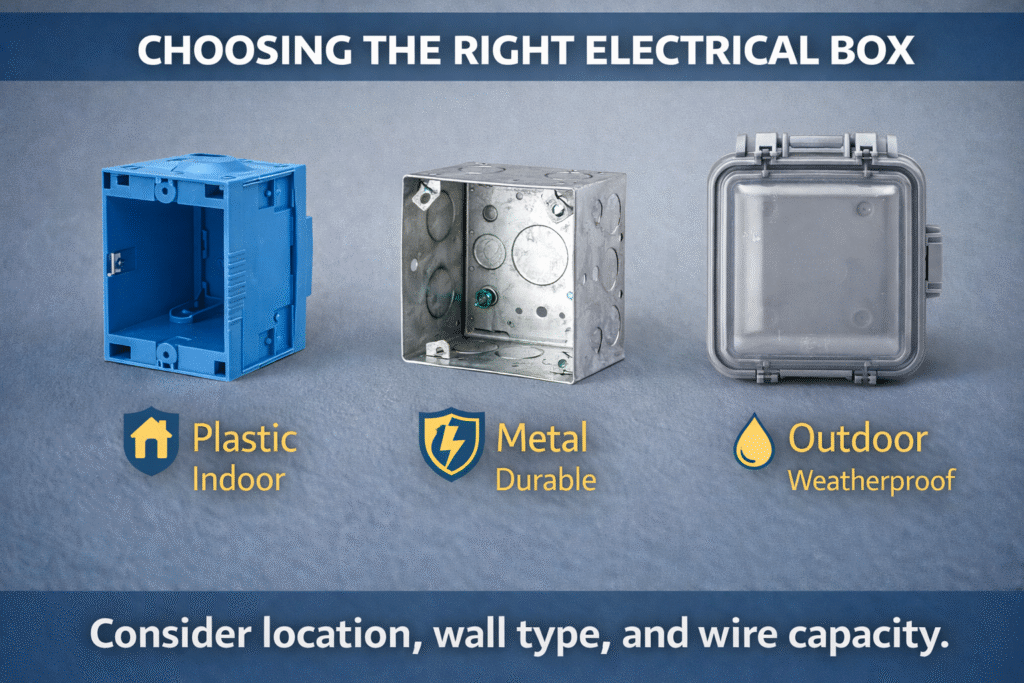
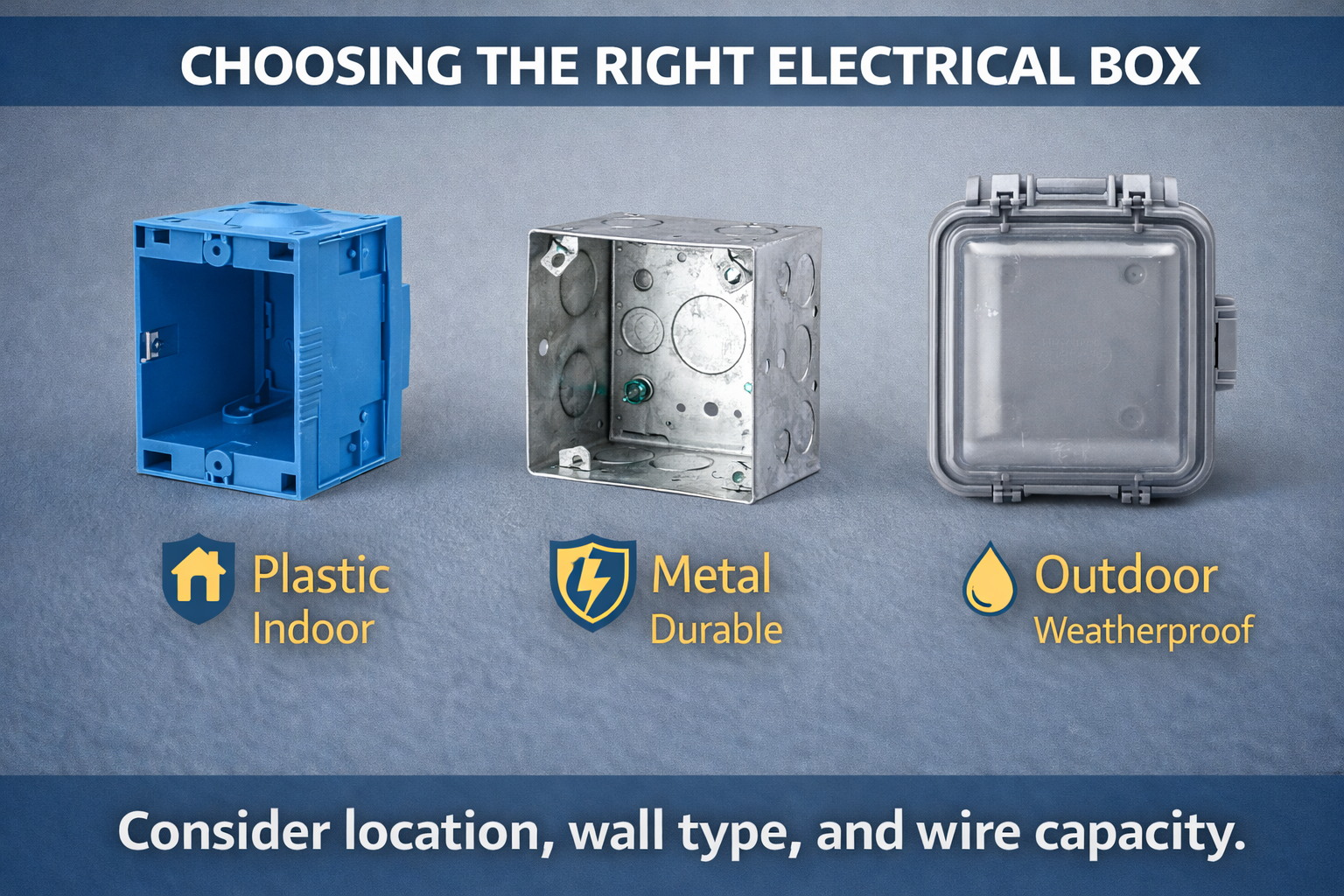
When weighing a plastic vs metal electrical box, your environment dictates the winner. For indoor jobs behind drywall, plastic is practical because it is non-conductive and budget-friendly. However, if wiring is exposed, such as a surface-mounted garage outlet, a metal box provides stronger impact protection.
Because steel conducts electricity, metal boxes require an extra safety step. To reduce shock risk, bond the circuit ground wire to the box using the dedicated green grounding screw.
- Weight and cost: plastic is lighter and cheaper.
- Durability: metal handles impacts better, while plastic can crack.
- Grounding: metal requires bonding, plastic does not.
Open Studs or Finished Drywall: Picking the Right Mounting Style
With open framing, choose “new work” boxes designed for studs. They typically include nails or brackets that attach directly to the framing before drywall goes up.
For finished walls, “old work” boxes use flip-out clamps that grip the drywall from behind. This avoids opening the wall to locate a stud and reduces repair work after installation.
The Suitcase Rule: How to Calculate Box Size So Your Outlets Fit
Think of the box like a suitcase. Overfilling it makes installation harder and increases risk. Check the box for a cubic inch volume stamp. That number helps you select enough internal capacity for wire count, device size, and safe wire folding space.
- 1-gang: one switch or outlet.
- 2-gang: two devices side by side.
- 3-gang: three controls in one wide box.
If wall depth is limited, a shallow box may be necessary. In that case, keep wiring minimal and confirm box fill capacity to avoid overcrowding.
From Ceiling Fans to Garden Outlets: When You Need a Specialty Rated Box
Ceiling fans require fan-rated boxes with proper bracing. Outdoor outlets need weatherproof boxes and in-use covers. For sealed outdoor enclosure solutions, you can explore our
Waterproof Junction Box options.
- Gaskets: seal between box and faceplate to block water.
- Covers: in-use covers keep cords protected while plugged in.
- Mounting: use proper mounting points to avoid leak paths.
Three Mistakes That Make Boxes Fail: Grounding, Tightness, and Depth
Boxes fail when grounding is skipped, devices are mounted too deep, or the box is not secured tightly. Use spacers when needed to bring outlets flush. Always bond metal boxes correctly, then verify stability before closing the wall.
Your 3-Step Shopping List for a Professional-Grade Install
- Location: indoor standard or outdoor weatherproof.
- Wall type: new work for open studs or old work for finished drywall.
- Device count: choose the right gang size and enough box volume.
Always confirm power is off at the breaker before working on wiring. If you want help selecting the right enclosure approach for a project, you can
contact us.