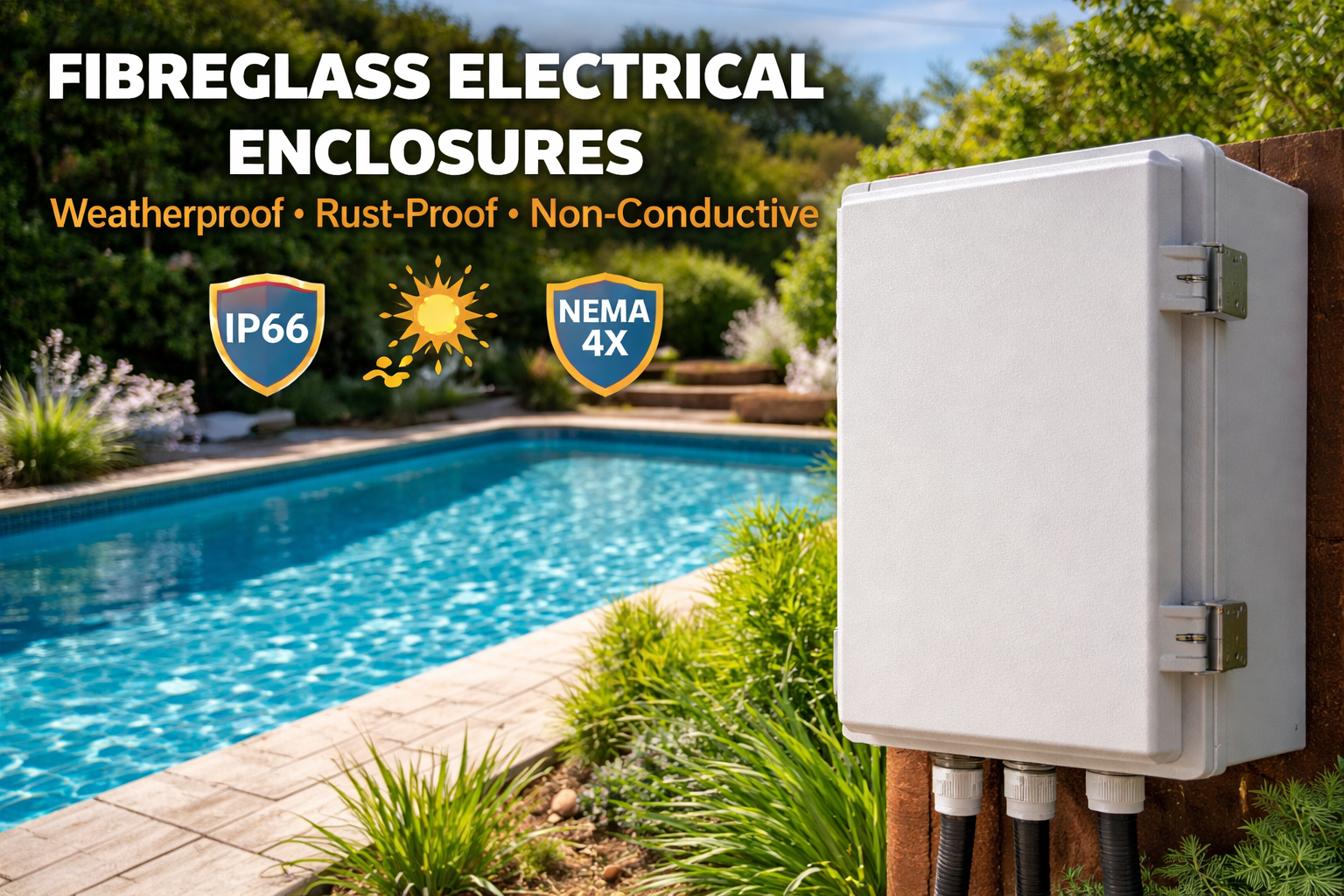
You pass them every day near swimming pools and garden walkways. Those sturdy, neutral-colored units are fibreglass electrical enclosures, high-tech shields designed to keep outdoor wiring protected. These enclosures use Glass Reinforced Plastic (GRP), a reinforced composite often compared to the strength of a boat hull. For reference on protection levels used for outdoor enclosures, you can review the official IP code overview based on IEC ingress protection guidance.
In practice, this creates the perfect “Goldilocks” material because a fiberglass enclosure box won’t rust like metal or snap like standard plastic. Crucially, this fiberglass housing is non-conductive, so it cannot energize the outer shell if a live wire touches the inside wall. If you are comparing materials across enclosure types, you can also explore our Metal Enclosure range for industrial use cases.
GRP vs. Metal: Why Reinforced Composites Outperform Traditional Materials
If you’ve dealt with rusted metal or brittle plastic yard covers, you know weather is brutal on outdoor equipment. Enter Fiber Reinforced Plastic (FRP), a composite that keeps its shape under pressure without bending or warping over time. That stability is one reason fibreglass is often selected for outdoor installations where sealing and long-term durability matter.
Choosing FRP over polycarbonate or metal comes down to three practical factors:
Fiberglass electrical boxes: lightweight, completely rust-proof, and highly impact-resistant.
GRP vs stainless steel cabinets: steel is strong but heavy and may degrade in aggressive environments over time.
Standard polycarbonate: light and rust-proof, but it can crack from hard impacts.
Unlike basic plastics that turn brittle during freezing winters, or steel that corrodes in damp soil, fibreglass remains stable year-round. This durability makes it a true maintenance-free solution. For installations that also require high sealing performance, you may want to compare with our Waterproof Junction Box solutions.
The Shock-Proof Advantage: Keeping Your Family Safe Around Outdoor Wiring
Picture the thick rubber coating on a household power cord. A fiberglass junction box works in a similar way, acting like a protective barrier around outdoor wiring. If a live wire touches the inside of a metal enclosure, the exterior can become a shock hazard. Thanks to the dielectric strength of composite housing, fibreglass prevents the enclosure body from becoming energized, which also simplifies installation in many outdoor setups.
From Salty Air to Scorching Sun: How Fibreglass Defies the Elements
Standard plastics often fail in constant sunlight, but fibreglass is designed for long-term outdoor exposure. UV stable outdoor electrical boxes resist fading and cracking under intense solar rays. In addition, the composite acts like an insulated shell, helping maintain steadier internal temperatures and extending the life of components such as timers, switches, and pool equipment.
When choosing an enclosure, check two common protection labels:
IP66: dust-tight protection and resistance to strong water jets.
NEMA 4X: water-tight performance and strong corrosion resistance, useful for coastal air.
Working with Fibreglass: Simple Tips for Your First Installation
Securing your enclosure requires a slightly different approach than standard boxes. Avoid drilling straight through the back where possible, and use external mounting kits to preserve the sealed compartment. For cable entry, use a proper cable gland so the rubber gasket grips the cable jacket and prevents water ingress.
The “Set It and Forget It” Investment: Choosing the Right Box for Life
If your environment includes moisture, salt, chemicals, or direct sun, upgrading to fibreglass is often the most durable long-term choice. When you are ready to source the right configuration, you can contact our team with your size, quantity, and target rating, and we will recommend the best enclosure solution for your project.