We’ve all been there: staring at a pile of shoes or scattered craft supplies, wishing the mess would vanish. Buying a storage cabinet seems like the perfect magic trick. However, according to professional organizers, impulse purchasing based on looks alone usually leads to wasted space. In practice, choosing the right storage cabinet means treating it as a functional tool, not just a decorative box.
If you want a quick overview of practical storage planning ideas, Family Handyman has useful guidance on storage solutions:
Family Handyman.
If you enjoy practical guides and checklists, you can also browse our Blog. If you want help choosing a durable option for heavy-duty storage needs, you can contact us.
How to Measure for Storage Cabinets Without Making the “Swing Space” Mistake
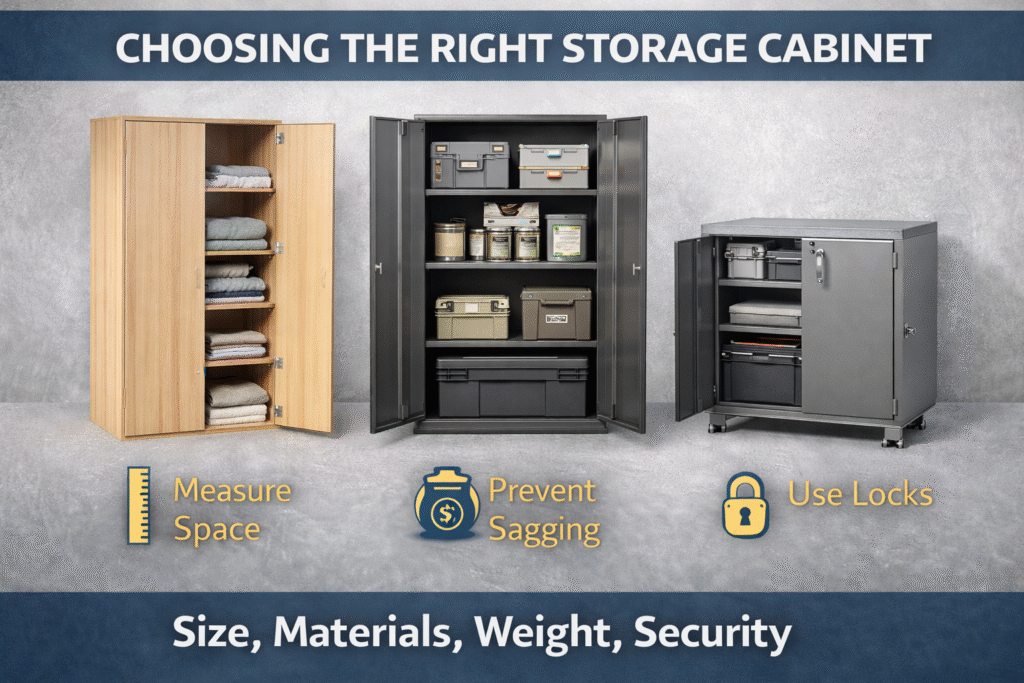
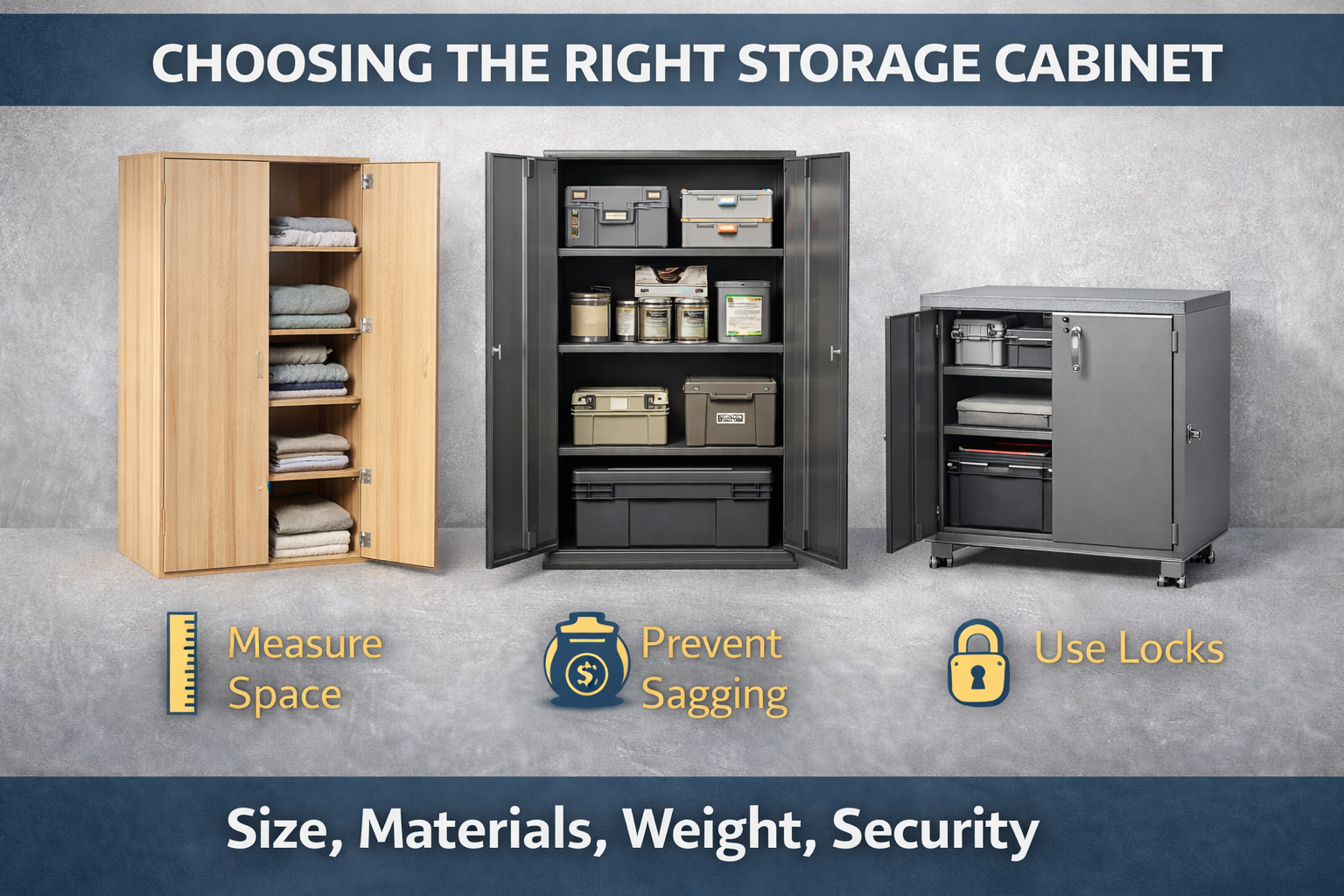
To avoid fit issues, apply the Footprint Rule. Measure from the thickest part of the baseboard, not the drywall. Then add Swing Space so doors can open without hitting furniture or blocking a hallway. If the room is tight, consider a tall cabinet to increase capacity without widening the footprint.
Wood vs. Metal: Matching Your Cabinet Material to the Room’s Humidity
Humidity should guide your material choice. Wood and MDF look great in living spaces, but garages and damp areas often require moisture-resistant solutions. A metal cabinet can handle humidity swings better, especially if it uses a powder-coated finish to resist scratches and rust.
Preventing Shelf Sag: Why Weight Capacity and Steel Gauge Matter
Construction quality matters for heavy loads. A lower steel gauge usually means thicker metal. Welded frames are also more rigid than flat-pack options. Always leave a safety buffer for dynamic loads caused by dragging and shifting boxes.
- Static weight: items sitting still on a shelf.
- Dynamic weight: stress added when items are moved or dropped.
Security and Style: The Benefits of Lockable Metal Cabinets and Modular Systems
Lockable cabinets help secure household chemicals and important documents. Modular systems also scale with your needs, letting you add drawers or extra cabinets later. Details like leveling feet and magnetic catches improve daily usability, especially on uneven floors.
Your Final Buyer’s Checklist: 5 Steps to the Perfect Storage Solution
- Space: confirm footprint and door swing clearance.
- Environment: choose materials for the room’s humidity.
- Weight: verify shelf load limits and frame rigidity.
- Features: prioritize adjustability and quality hinges.
- Budget: balance upfront cost with long-term durability.
Ultimately, choosing the right storage cabinet is an investment in daily peace of mind. Measure first, match materials to your room, and verify load capacity before buying.