You’re washing dishes when your phone suddenly slides into a full sink. That split-second panic is universal, yet the difference between a ruined device and a quick towel-off relies on the IP67 rating. While marketing terms often exaggerate, this standardized code offers a precise promise of survival.
Many shoppers assume these numbers represent a single score, but the meaning of ingress protection actually involves two separate grades for dust and water. The first digit creates a barrier against dirt, while the second defends against liquid intrusion.
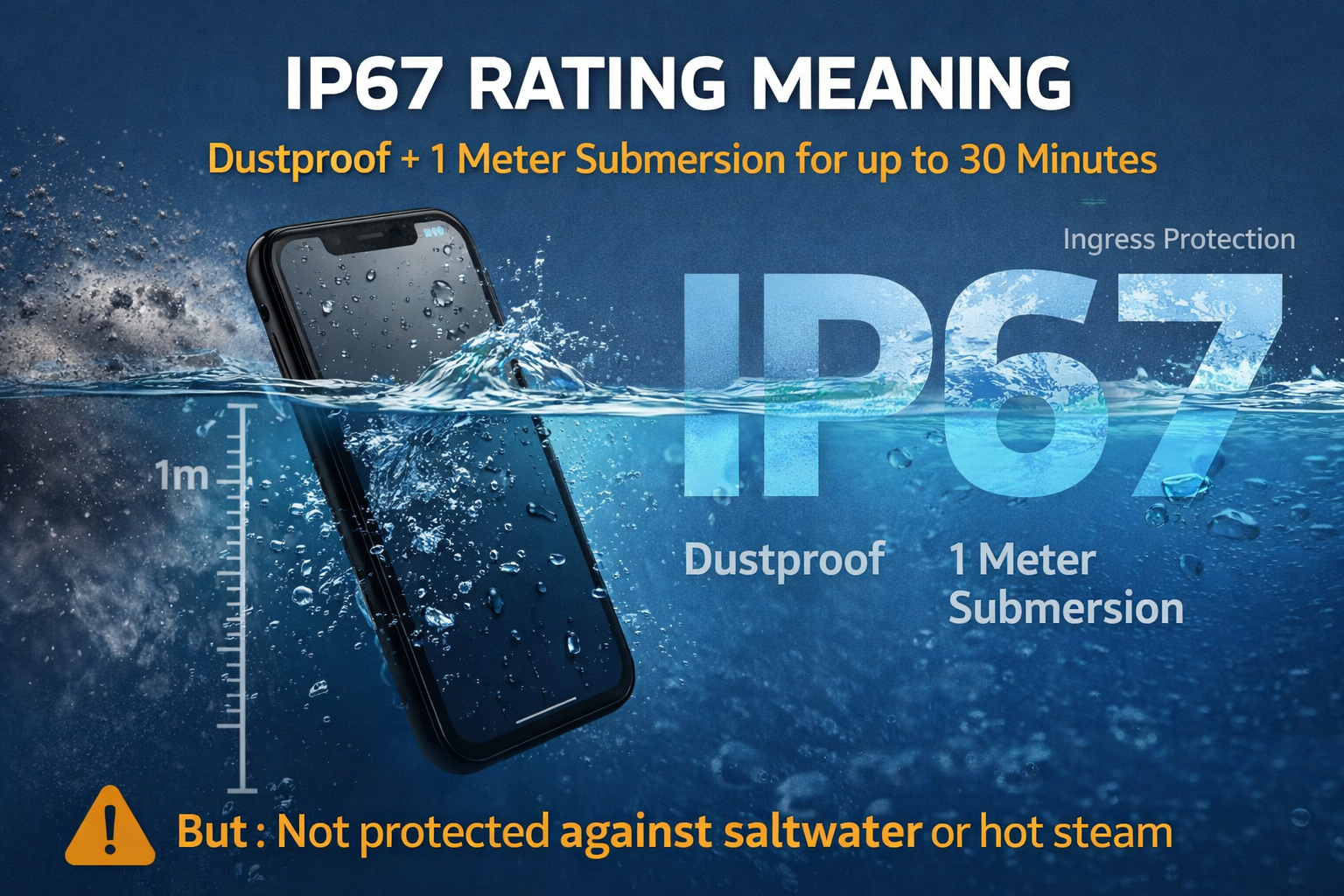
So, what does IP rating mean for you? In practice, it confirms your electronics can survive accidental drops up to one meter deep. This rating ensures peace of mind for life’s messy moments without promising your phone is a submarine.
Decoding the Digits: Why Ingress Protection Is Not a Single Score
When you see “IP67” on a spec sheet, it is easy to mistake it for a single score out of 100, like a grade on a math test. In reality, that code stands for “Ingress Protection,” and it is actually two separate grades sitting side-by-side. The first digit rates how well the device blocks solid objects, while the second measures its defense against liquids. This distinction is vital because a gadget could technically be great at repelling water but terrible at blocking sand.
Manufacturers cannot simply invent these numbers to boost sales. To claim a specific IP rating, they must follow a global rulebook known as the IEC 60529 standard. This acts as a universal testing guide, ensuring that every device is subjected to the same controlled laboratory conditions. It guarantees that the badge on the box is based on rigorous evidence rather than marketing hype.
Learning how to read ingress protection codes gives you a clearer picture of what your electronics can actually handle. You are no longer guessing about durability; you are looking at a precise report card. The full story begins with the first half of the code: the defense against solids.
Beyond the Surface: How a ‘6’ Keeps Dust and Grit Out of Your Charging Port
Ideally, you want to take your gear everywhere, but the real world is full of grit. The “6” in IP67 represents the highest score on the ingress protection scale chart, certifying that the unit is officially “dust-tight.” Unlike lower ratings that might allow some dust entry as long as the device keeps working, a level 6 seal locks out everything. This is crucial for protecting electronics from particle ingress that commonly clogs charging ports or triggers internal overheating.
Without this barrier, microscopic specks can infiltrate delicate hardware and cause long-term failure. A dust-tight electronic enclosure is essential for:
- Sandy beaches where grains can jam buttons.
- Hiking trails filled with fine dirt.
- Woodshops or DIY zones with flying sawdust.
With the solids completely blocked, the only remaining question is how the device handles a sudden plunge into water.
The 30-Minute Rule: What Submersion at 1 Meter Actually Looks Like
While dust protection is essential for long-term durability, water is the immediate threat that worries most owners. The second digit in the code addresses this fear, indicating that your device is capable of withstanding temporary immersion in water depth. This rating goes beyond simple splash resistance, offering a robust shield against those heart-stopping moments when gravity wins and your electronics take a plunge.
To earn this specific grade, a device must survive being submersible up to 1 meter (roughly 3.3 feet) for a duration of 30 minutes. If you accidentally drop your phone in the sink or the shallow end of a pool, the seals are designed to hold tight within that specific window of time and depth. This half-hour buffer provides the critical opportunity you need to retrieve and dry off your gear before permanent damage occurs.
Crucially, this standard tests static pressure in a lab, meaning it does not account for the force of moving water like ocean waves or a high-pressure faucet. The IP67 waterproof rating is perfect for accidental drops, but it isn’t a license to go swimming. Since different environments pose different risks, you need to know if this level of protection is enough for your specific needs or if you require an upgrade.
IP67 vs. IP68 vs. IP54: Which Rating Should You Buy?
Deciding how much protection you actually need can save you money, as higher ratings often come with steeper price tags. While IP67 is the “sweet spot” for most users, you will frequently see other numbers like an IP44 rating or IP54 on headphones and fitness trackers. These lower scores mean the device can handle sweat or a light drizzle, but a fall into a puddle would likely be fatal.
Matching the right level of durability to your lifestyle is simple:
- IP54: Best for workouts and rain. What is IP54 water resistant? It means the device is splash-proof, but strictly not waterproof.
- IP67: Best for general peace of mind. It handles accidental drops in sinks, toilets, or shallow pools.
- IP68: Best for adventurers. When comparing IP67 vs IP68 for smartphones, the “8” indicates it can stay submerged deeper and longer than the standard half-hour.
Selecting the right category from the IP rating chart ensures your gear survives your daily routine without breaking the bank. However, be aware that even the highest laboratory scores can crumble when faced with two specific enemies found in the real world.
The ‘Kryptonite’ of Electronics: Why Saltwater and Steam Bypass Your Seals
Fresh water is the only liquid used in certification labs, which often creates a false sense of security for beachgoers. The ocean contains salt that actively corrodes and dries out the rubber gaskets designed to keep moisture out. Once this chemical degradation begins, the impact of salt water on seals can essentially turn a protected device into a brick, so it is much safer to leave your electronics in your beach bag.
Heat poses an even sneakier threat than liquid water. Can you shower with an IP67 watch? The answer is usually no, because steam is a gas, not a liquid. Hot vapor travels through barriers much easier than cool water droplets and can condense inside your screen later, bypassing the seal entirely during a hot shower or sauna session.
Velocity is the final factor that ruins water resistance. Testing involves still, stagnant water, so powerful jets from a faucet or the dynamic pressure of swimming strokes can force liquid past the defenses. Respecting the limitations of temporary submersion prevents most damage, but if an accident does happen, knowing how to dry your device properly is your last line of defense.
Your IP67 Survival Guide: What to Do After a Drop
Understanding the IP67 rating meaning turns a confusing code into a clear boundary for device safety. You can now look past marketing hype and know exactly what your electronics can handle during daily use, rather than guessing at their limits.
If an accident happens, follow this simple recovery plan:
- Rinse: Gently wash off salt or chlorine with fresh water.
- Dry: Pat the device thoroughly with a soft cloth.
- Wait: Never charge a wet device; let it air dry completely.
While a high ingress protection rating offers peace of mind, remember that most warranties still exclude liquid damage. Use the standard IP rating table as a guide for durability, but treat the rating as an insurance policy for accidents, not an invitation to swim.