You’ve finally hung those patio string lights, but every light drizzle triggers the frustrating mystery trip where your breaker flips. In practice, moisture creeping into an unprotected outlet can create short circuits and unsafe conditions.
A true weatherproof electrical box relies on thick rubber gaskets and proper sealing. Standard indoor boxes are not designed for outdoor exposure. If you want a sealed solution designed for exterior projects, explore our
Waterproof Junction Box options.
Damp Porch or Rain-Drenched Wall: Selecting the Box for Your Exposure
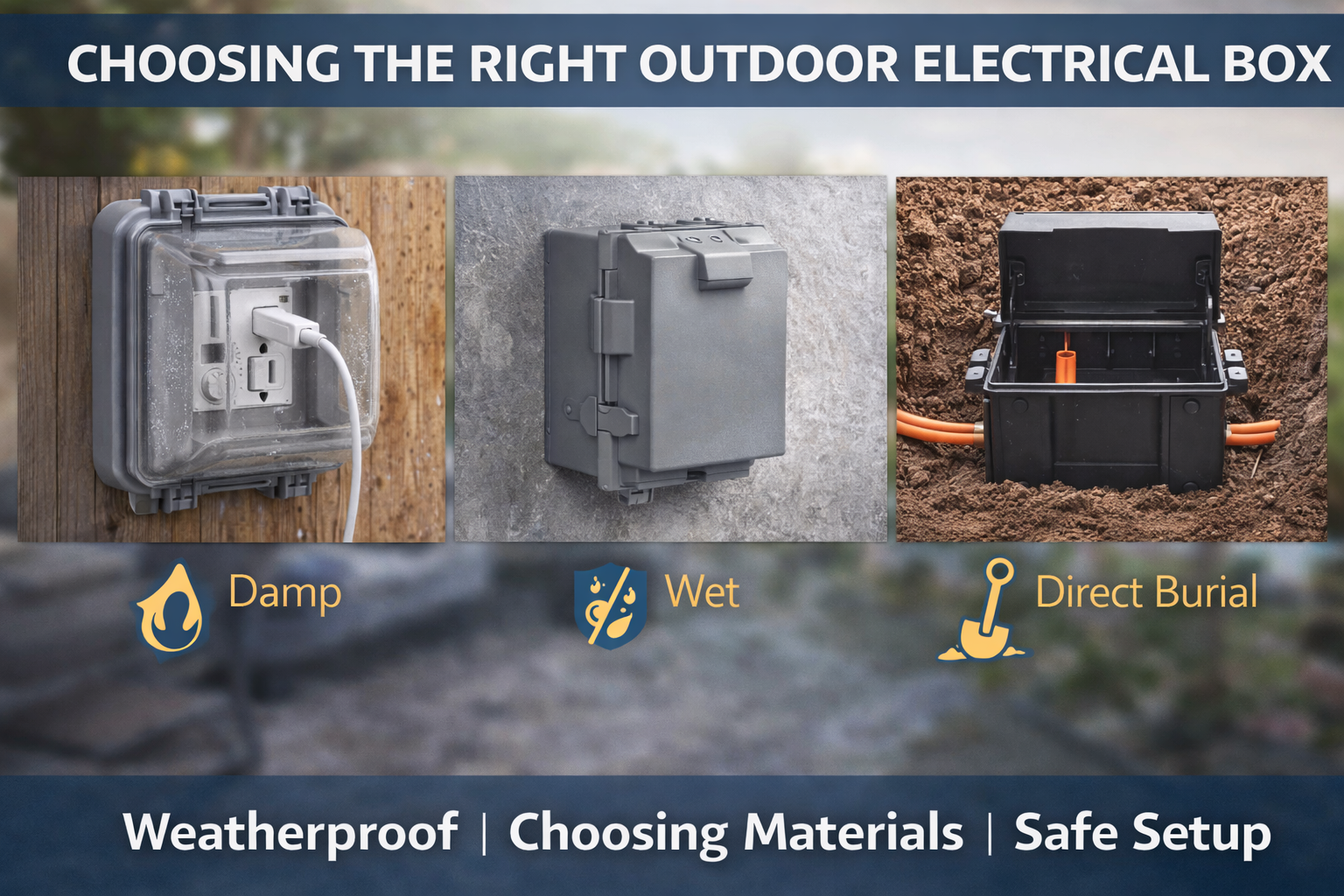
Safety starts by matching your location to the correct exposure type. Damp areas are protected from direct rain, while wet areas face direct rainfall and spray. Direct burial is a separate category for underground runs.
- Damp: covered porch areas where humidity exists but rain does not hit directly.
- Wet: exposed exterior walls, fences, and open-sky locations.
- Direct burial: underground trenches running power to outdoor features.
For rating references, NEMA enclosure type guidance explains protection levels and use cases:
NEMA enclosure types.
In most residential rain applications, NEMA 3R is often sufficient, while 4X is typically chosen for harsher corrosion or industrial environments.
Plastic vs. Metal: Choosing an Enclosure That Won’t Rust or Crack
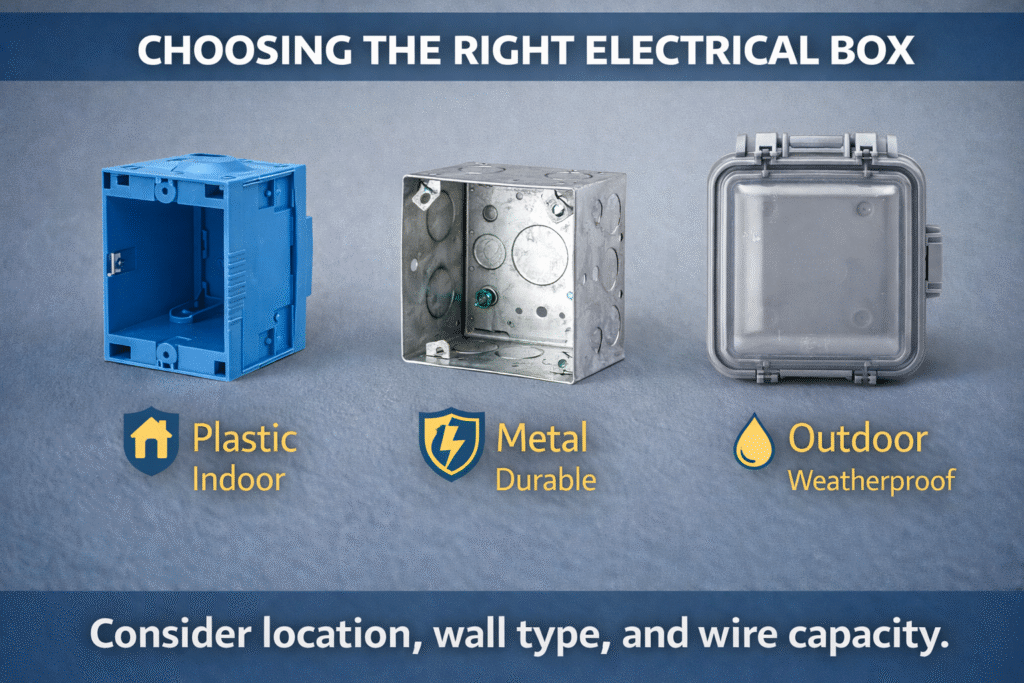
For many outdoor installs, UV-stable plastic is a simple DIY choice. It does not conduct electricity and it resists corrosion. Metal boxes can be better for impact resistance, but they require correct grounding and a corrosion-resistant finish.
If your project needs a tougher enclosure approach beyond a basic outlet box, you can also review our
Metal Enclosure range.
The “Crowded Room” Rule: Sizing Your Box and Understanding “Gangs”
Outdoor wiring needs space for safe folding and heat control. Gang size defines how many devices fit side by side. Depth also matters because GFCI outlets are bulkier than standard receptacles.
- Single outlet: standard 1-gang box.
- Switch and plug combos: 2-gang box.
- Thick wires or GFCIs: choose a deeper box to avoid crushing connections.
The “In-Use” Shield: Protecting Plugs While They Operate
Standard flap covers do not protect cords while plugged in. For wet locations, use an in-use cover that closes around the cord and keeps rain out during operation.
- Self-closing hinges: close automatically when cords are removed.
- Padlock loops: reduce tampering risk.
- Bubble depth: fits bulky plugs while keeping the lid shut.
Watertight Seals and Gaskets: Preventing the Mystery Trip
For surface mount installs, seal unused knockouts and use proper fittings for conduit entry. Apply silicone along the top and sides to block water intrusion. Leave the bottom edge unsealed so condensation can drain as a weep path.
Your Safe Outdoor Power Action Plan
Reliable results come from matching the rating to the location, choosing the right material, sizing the box correctly, and using an in-use cover with proper sealing. If you want help choosing the best enclosure for your project, you can
contact us with your use case and environment details.