There is a distinct frustration in digging a rusted lawnmower out from under a soggy tarp because your garage lacks floor space. According to common landscaping knowledge, basic backyard items face rapid depreciation from constant exposure to seasonal moisture and intense UV rays. Your power tools represent a significant financial investment, yet leaving them unprotected guarantees premature mechanical failure.
Combating this slow drain on your wallet means rethinking how you protect outdoor gear. In practice, disorganized yards suffer from the “Lego effect”—a chaotic jumble where expensive equipment is constantly lost or ruined by the elements. Finding the right outdoor storage solutions involves a practical framework for selecting durable materials and ideal sizes to maximize your patio storage ROI.
Will It Fit? Converting Your Pile of Tools into Square Footage
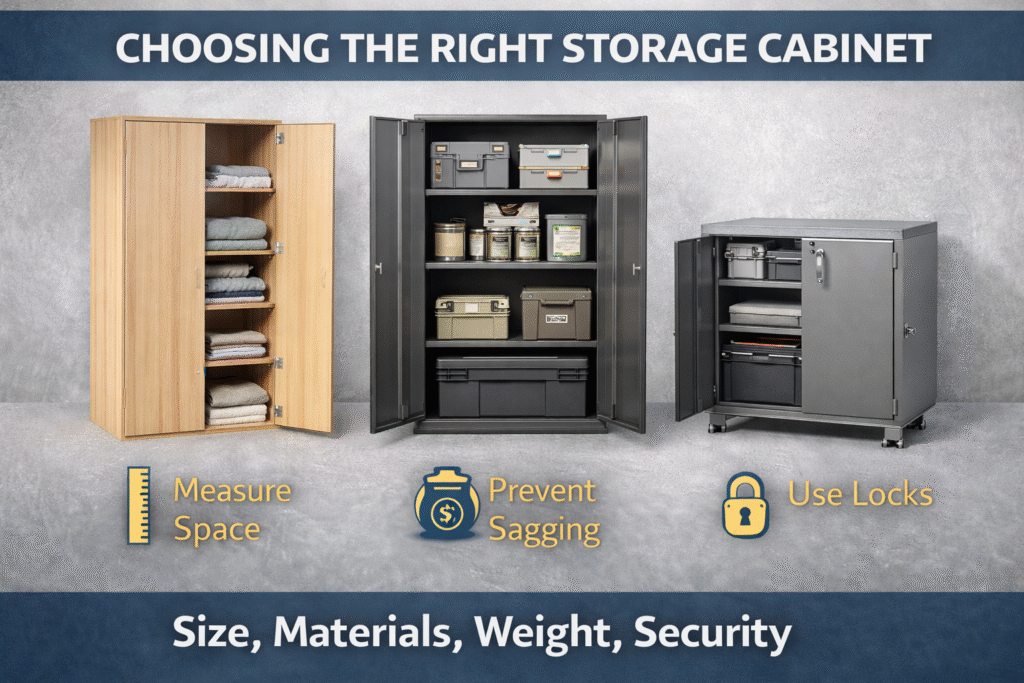
Buying an outdoor storage box only to realize the thick walls eat up inches of usable room is a common and costly pitfall. Manufacturers usually advertise exterior dimensions—the footprint taking up your yard—rather than usable interior capacity. To know what will actually fit, use the “stacking” method: gather your items, pack them closely together like a walk-in closet, and measure the resulting block’s total volume.
Translating everyday yard gear into cubic footage makes sizing a small outdoor storage cabinet simple. Consider the required average sizes for these common items:
- Standard push mower: 15 cubic feet
- 4 stacked patio chairs: 25 cubic feet
- Average gas grill: 30 cubic feet
- 3 bags of mulch: 4 cubic feet
Always finalize your math by applying the “20% Buffer Rule.” This spatial buffer zone ensures you can actually reach your tools without emptying the entire unit. If your footprint grows too large, vertical outdoor storage provides an excellent alternative. With capacity dialed in, the next critical step is evaluating material longevity and long-term maintenance costs.
Resin vs. Wood vs. Metal: The Real Cost of Maintenance Over 5 Years
Picking a shed based on the price tag alone hides the true cost of ownership over five years. Wood looks beautiful, but it acts like a sponge. Due to material porosity—microscopic holes in the natural fibers—wood naturally absorbs ambient moisture. Without regular painting or sealing to block out high humidity, rot quickly sets in and destroys your investment.
When weighing alternatives, let your local weather guide you. Metal is incredibly secure, but heavy moisture triggers oxidation (rust), making it a poor choice for rainy regions. Conversely, a plastic outdoor storage cabinet requires zero painting, needing only an occasional hose-down. However, you must buy high-quality plastics for dry, sunny climates; intense sun exposure causes UV degradation, where solar energy breaks down chemical bonds and turns cheap materials brittle over time.
For a deeper dive into how UV rays affect outdoor plastics, This Old House offers an expert breakdown worth consulting before you buy.
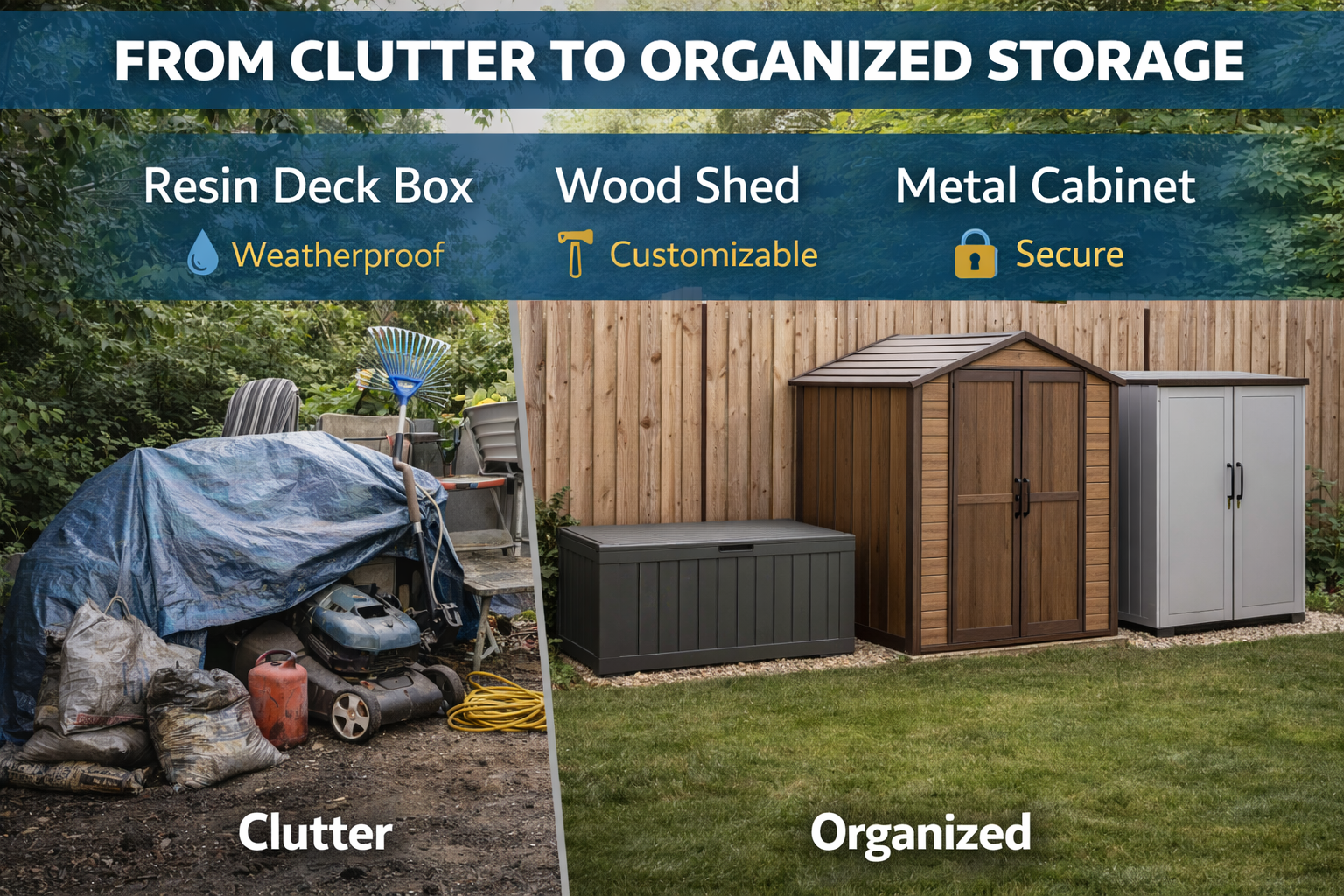
To settle the material debate for everything from heavy-duty structures to simple weatherproof deck boxes, consider this maintenance breakdown:
- Good (Metal): Lowest upfront cost, but highly rust-prone in wet climates.
- Better (Wood): Highly customizable and sturdy, but requires ongoing weekend painting projects.
- Best (Resin): Rust-proof, fade-resistant, and “set it and forget it” simple.
After matching your maintenance tolerance to a material, the unit’s shape and function must align with your specific spatial constraints.
From Deck Boxes to Tall Cabinets: Picking the Right Shape for Your Space
If your patio feels like an obstacle course, the physical footprint of your storage matters as much as the material. For open decks, horizontal solutions easily handle bulky items like pool chemicals or patio cushions. Think of an outdoor storage chest as a heavy-duty trunk for your yard. When dealing with tight layouts where floor space is premium, multi-functional furniture becomes the ultimate problem-solver. Choosing a chest that doubles as a seating bench reclaims your entertainment area while keeping daily-use items instantly accessible.
Narrow side-yards, however, require you to think upward rather than outward. Installing an outdoor vertical storage cabinet leverages empty air space to house awkward, long-handled tools like rakes and brooms. This upright outdoor storage functions like a traditional closet, maximizing capacity without eating up your walking path. According to the Family Handyman’s outdoor storage guide, vertical units are consistently rated among the most space-efficient options for small yards. Even the perfect silhouette requires proper ground preparation to ensure structural integrity over time.
Why a Level Foundation Saves Your Doors from Sticking
Assembling a new unit only to find the doors stuck is incredibly frustrating. This “shed racking”—a structural twisting—happens when your base isn’t perfectly flat. Prevent it before building with a simple three-step leveling check: clear all surface debris, tamp the bare soil firmly, and lay a long carpenter’s level across the footprint in multiple directions to ensure an even surface.
Water remains the silent enemy of any yard upgrade. Proper shed foundation installation requires a dedicated drainage zone, which is easily created by laying down two inches of crushed gravel. Giving rainwater a fast escape route stops it from pooling beneath the floorboards, effectively answering how to prevent mold in outdoor storage while keeping your valuable lawn gear safe from rot.
Beyond physical dimensions, the overall size of your unit dictates municipal regulations. As a general rule of thumb, exceeding 100 square feet usually triggers the need for local permits for backyard structures—the International Association of Certified Home Inspectors provides a useful permit reference to help you verify requirements in your area. With a solid foundation prepped and legalities cleared, you are ready to finalize your setup.
From Clutter to Calm: Your 3-Step Action Plan to Outdoor Organization
Transforming backyard chaos into organized calm allows you to finally reclaim your valuable garage space. Before purchasing a garden storage unit or outdoor storage cabinet, run through this final diagnostic:
- Inventory Audit: Verify your exact volume needs before clicking “buy.”
- Material Match: Confirm the materials will survive your local weather patterns.
- Placement Check: Finalize a level location ensuring proper drainage and daily accessibility.
Proper outdoor storage isn’t just about hiding clutter; it is an investment in your home’s functionality. Start by measuring your bulkiest item today, and step confidently toward a beautifully streamlined, protected yard.