Most homeowners wouldn’t dream of burying a power strip in the garden, yet many landscape lighting projects fail because underground connections lack similar protection. An underground junction box acts as a “safe room” for your wiring, mirroring the function of the boxes behind your indoor outlets but built to withstand wet soil. Without this specialized electrical wire junction box, moisture quickly ruins standard connections, often leading to the “Flickering Light Mystery” where new lights fail unexpectedly.
The real culprit is often a process industry experts call “wicking.” Much like a straw draws up liquid, exposed wire insulation can pull ground moisture deep into the copper core, destroying the cable from the inside out. Using a soil-rated outdoor waterproof wire splice enclosure prevents this invisible damage. Furthermore, it preserves a critical access point, ensuring you can service the system later without excavating your entire lawn.
Is Your Box a Scuba Diver or a Swimmer?
Most people assume that keeping water out of an electrical box is just about stopping rain, but burying a connection changes the physics entirely. Soil holds moisture like a heavy, wet sponge, creating constant pressure against the box walls—similar to how your ears pop at the bottom of a deep swimming pool. This force, known as hydrostatic pressure, will eventually push water through the tiniest hairline crack of a standard outdoor outlet box, corroding your wires within months.
To ensure your system survives the wet season, you need to check the “Ingress Protection” (IP) code stamped on the enclosure. Think of these numbers as a survival score for your equipment:
- IP65: Resistant to water jets (rain), but not safe for burial.
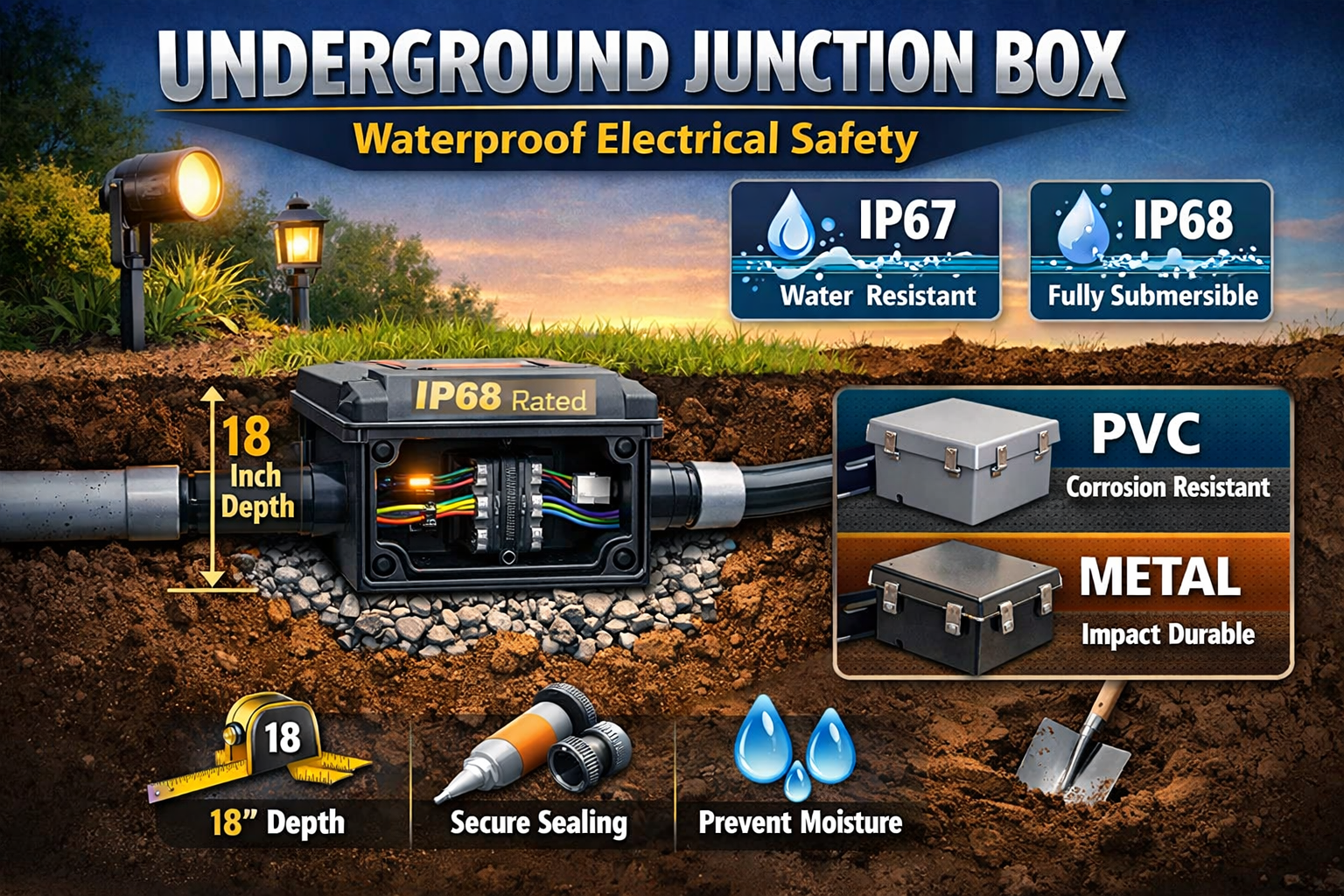
- IP67: Can handle temporary submersion, like a puddle that drains away after a storm.
- IP68: The gold standard for underground use; designed to remain sealed while completely submerged under pressure.
Real protection relies on a mechanical seal rather than just tight plastic. You want an electrical junction box with terminals that uses a rubberized gasket and screws to clamp the lid down, rather than a simple snap-on cover. Investing in IP68 rated weatherproofing for garden lighting or a complete submersible electrical connection kit might cost a few dollars more now, but it guarantees that groundwater stays in the dirt where it belongs.
Choosing Your Armor: PVC vs. Metal Enclosures
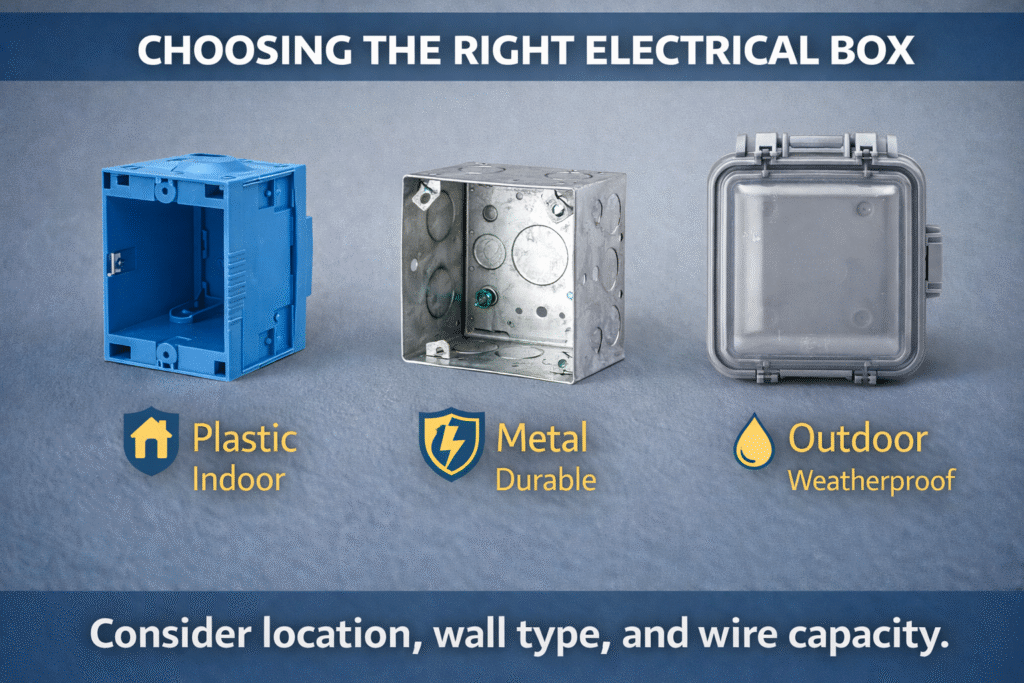
Just as you wouldn’t wear a wool coat to the beach, your choice of enclosure material depends entirely on the environment. A metal electrical junction box acts as a heavy-duty shield against accidental shovel strikes, but it has a natural enemy: acidic soil. If your ground is chemically aggressive or constantly wet, rust will eventually eat through steel, compromising the seal. In the PVC vs metal subsurface enclosures debate, non-metallic PVC is often the winner for residential projects because it is immune to corrosion and handles freezing ground temperatures without cracking.
Material choice also dictates your safety wiring. Plastic acts as a natural insulator, but a metal conduit box can become a conductive hazard if a hot wire slips loose inside. To prevent the box itself from becoming “live” and shocking you, you must attach a grounding wire directly to the metal frame. While non-metallic conduit system integration creates a simpler install by skipping this extra bonding step, metal boxes provide a robust electrical path that guarantees your breaker trips instantly during a fault.
- Cost: PVC is budget-friendly; Metal commands a premium for durability.
- Corrosion Resistance: PVC is immune to rot; Metal degrades in acidic soil.
- Impact Strength: Metal resists crushing; PVC is best for undisturbed soil.
- Grounding: PVC is non-conductive; Metal requires a dedicated safety bond.
Once you have selected your material, you need to determine the correct burial depth to ensure the safety of both the equipment and the landscape.
The 18-Inch Rule: Protecting Your Connections from Shovels and Frost
Safety isn’t just about the material of your enclosure; it is about how far down you place it to prevent accidental contact. If you bury a line too shallow, a simple weekend gardening project could turn dangerous if a spade slices through a live wire. The National Electrical Code burial requirements generally dictate an 18-inch cover for standard residential PVC conduit, though rigid metal pipes can sometimes sit as shallow as 6 inches because they resist impact better. While local rules vary, adhering to the 18-inch standard is the safest bet for most DIY projects, keeping your underground electrical box well below the “damage zone” of rototillers and lawn aerators.
Water management is just as critical as depth, as even waterproof boxes can fail if submerged in a permanent mud puddle. When excavating, dig about six inches deeper than the required depth and fill that extra space with crushed gravel before setting the enclosure. This simple porous layer allows rainwater to drain away from the unit rather than pooling around the seals. Managing groundwater in external power hubs through a proper stone bed prevents the box from heaving upward or “floating” during freeze-thaw cycles, ensuring your connections stay stable year-round.
Calculating what depth to bury electrical boxes requires measuring from the top of the conduit to the surface grade, not from the bottom of the trench. If you only dig an 18-inch trench and insert a 2-inch pipe, you are technically shallow and failing code. Once you have established the correct elevation and drainage base, the physical structure is secure, but the wires inside remain vulnerable to the one element that ruins more electronics than anything else: moisture intrusion. This leads us to the final layer of defense: specialized sealing.
How to Create a Submersible Seal That Lasts Decades
Water eventually bypasses standard rubber gaskets, especially during heavy rains or snowmelt. To create a truly permanent outdoor waterproof wire splice, professional electricians often rely on encapsulation rather than just tightening screws. While mechanical seals work well for damp locations above ground, resin-filled cable jointing kits are the gold standard for burial applications. These kits contain a two-part liquid that you pour over your connections; it cures into a hard, waterproof block, effectively “fossilizing” the wires so moisture can never touch the live copper.
Your enclosure’s most vulnerable spots are actually the holes where wires enter, which is why you must use proper cable glands—specialized fittings that grip the cable jacket like a vice to block water intrusion. When deciding between gel filled vs mechanical seal connectors, remember that gel offers flexibility if you need to re-open the box later, while mechanical compression is better for permanent runs. To master how to seal external wiring underground, follow this closure protocol:
- Strip the outer cable sheath only after passing the wire through the gland to protect the inner insulation.
- Tighten the compression nut until the rubber seal bulges slightly around the cable jacket.
- Apply a non-hardening silicone sealant over the exterior nut for a secondary moisture barrier.
- Verify the internal locking ring is wrenched tight against the box wall.
With your connections sealed against the elements, you are ready to assemble the full system.
Building Your Outdoor Power Hub: A 4-Step Checklist for DIY Success
Completing a step-by-step landscape power installation brings a sense of accomplishment, but safety remains the priority before you cover your tracks. Before backfilling the trench over your direct burial electrical enclosure, ensure every seal is tight and verify the system’s integrity. Think of the GFCI as your “Safety Fuse”—a guardian that watches for current leaks and cuts power instantly if moisture breaches your defenses. Testing this now ensures that your hard work translates into lasting peace of mind rather than future repairs.
While understanding j box electrical wiring demystifies your outdoor grid, knowing your limits is equally vital. If the project complexity exceeds your comfort level or local regulations, call a licensed electrician immediately. Electricity rewards respect, not guesswork. With your connections waterproofed and the breaker verified, you can enjoy your outdoor oasis knowing the hidden infrastructure is secure.